
Type 2 diabetes complications · Terni and Latina, Italy
Diabetes complications are more than a number to keep under control.
Year after year, diabetes can affect the nerves, the eyes and the feet. We address it from every angle — not only with medication, but by acting on everything that drives the disease and its complications.
Perhaps you recognize yourself here
You have lived with diabetes for years. And something has changed: in your feet, your eyesight, your energy.
Complications don’t appear overnight. They announce themselves with small signs that are easy to ignore until they become a daily problem.
Diabetes symptoms in the feet
Tingling in the evening. A burning feeling or, on the contrary, numbness. A small wound that takes too long to heal — or doesn’t heal at all. These are the foot symptoms through which diabetes most often makes itself known.
Diabetes and your eyesight
Reading has become more tiring. You see shadows or blurred areas in the center of your vision. You worry that your eyes will get worse over the years.

Nerve pain and fatigue
Nerve pain that comes on at night. Heavy legs. The tiredness typical of diabetes, and the feeling that you do everything you are told — and it is never enough to feel truly well.
If this sounds like you, you are not a lost cause. You are a patient whose diabetes has not yet been addressed at all its roots.
Why complications develop
High blood sugar leaves neurological and vascular damage. This is where it comes from.
Neuropathy, retinopathy and diabetic foot do not depend on blood glucose levels alone. They arise from several processes that act together, for years, on the most delicate tissues. Each of these processes is a point where action can be taken.
Glycation. Excess sugar “glues” tissue proteins together, damaging nerves and blood vessels over time.
Oxidative stress. A burden of silent inflammation that wears down the cells of the eyes, the nerves and the microcirculation.
Microcirculation under strain. The smallest capillaries — in the retina, the nerves and the feet — are the first to receive less oxygen and nourishment.
Functional deficiencies. Micronutrient deficiencies, often caused by the medications themselves, which worsen nerve damage.
Controlling blood glucose alone means acting on a single root. Our approach addresses many of them at the same time.
When results speak louder than words
Uncontrolled type 2 diabetes: a documented case.
A concrete example of how HbA1c was brought down by acting on several levers together, without adding new drugs. We would rather show what happened in real clinical practice than describe it in words.
Patient aged 62 · January–February 2026
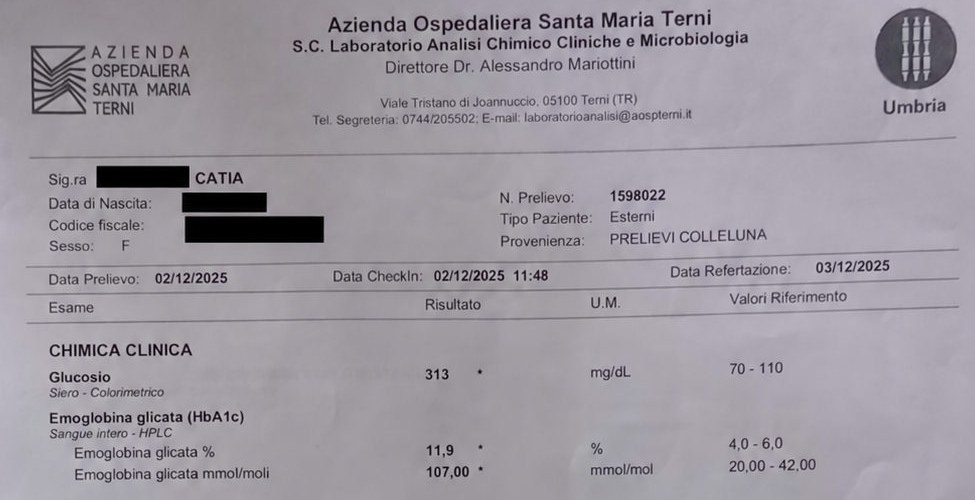
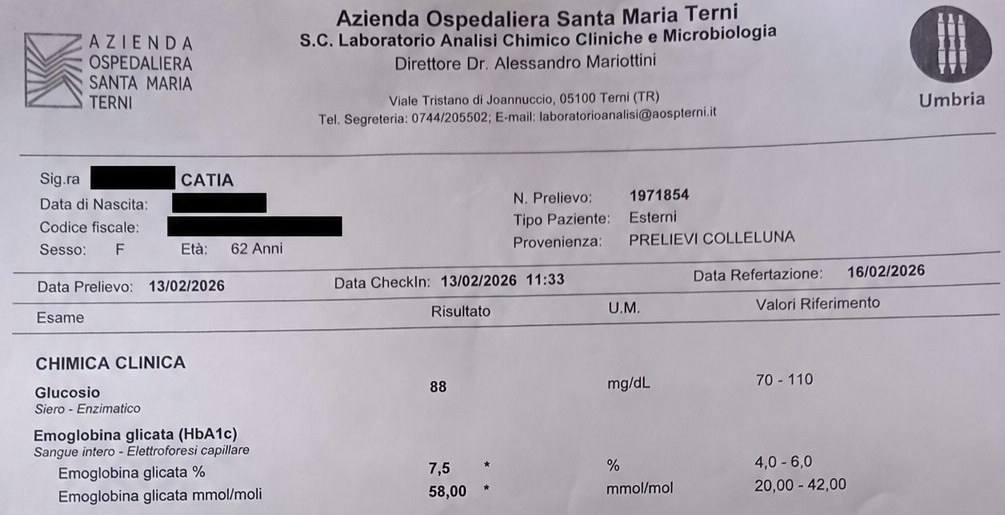
At the start: severely uncontrolled type 2 diabetes (HbA1c 11.9% at the last test, in December), already on drug treatment. Driving license at risk of not being renewed. No new drug was added during the program.
| Parameter | At the start (January) | After 45 days |
|---|---|---|
| Glycated hemoglobin (HbA1c) | 11.9% | 7.5% |
| Fasting blood glucose | 313 mg/dL | 88 mg/dL |
| Fitness to drive | Renewal at risk | Renewed |
The original lab reports, with personal data partly covered. Tap a report to see it in full.
Why our approach is different
Type 2 diabetes, treated from every angle.
We don’t treat diabetes with a prescription alone. We approach it as a disease of the whole body, working on five levers that act together.
Medication
Conventional treatment, managed and optimized as the solid foundation of the program.

Nutrition
An eating plan that targets insulin resistance, not just calorie counting.
Lifestyle
Movement, sleep and reducing inflammation, tailored to your real situation.
Supplements
Intravenous infusions with antioxidants and targeted molecules for the nerves and microcirculation, chosen according to the deficiencies found.
Technology
Intravenous laser, a well-tolerated technology that supports microcirculation — the critical point where diabetes does the most damage.
Each lever on its own achieves limited results. It is the combination — tailored to the individual’s biology — that makes the difference to complications. This is the method we apply to every patient with diabetes.
What we do, complication by complication
Not a one-size-fits-all protocol. A tailored approach for each complication.

Diabetic foot
Recognizing the early symptoms and restoring microcirculation before it is too late
Diabetic foot develops where reduced sensation (neuropathy) meets poor circulation: the first sign is often a small wound that goes unnoticed and is slow to heal. Acting early on microcirculation and inflammation is what makes the difference.
- Assessment of circulation and sensation in the foot
- Intravenous laser and infusions to improve oxygenation and microcirculation
- Treatment and prevention of diabetic foot ulcers and non-healing wounds
- Education in daily foot care to prevent new wounds
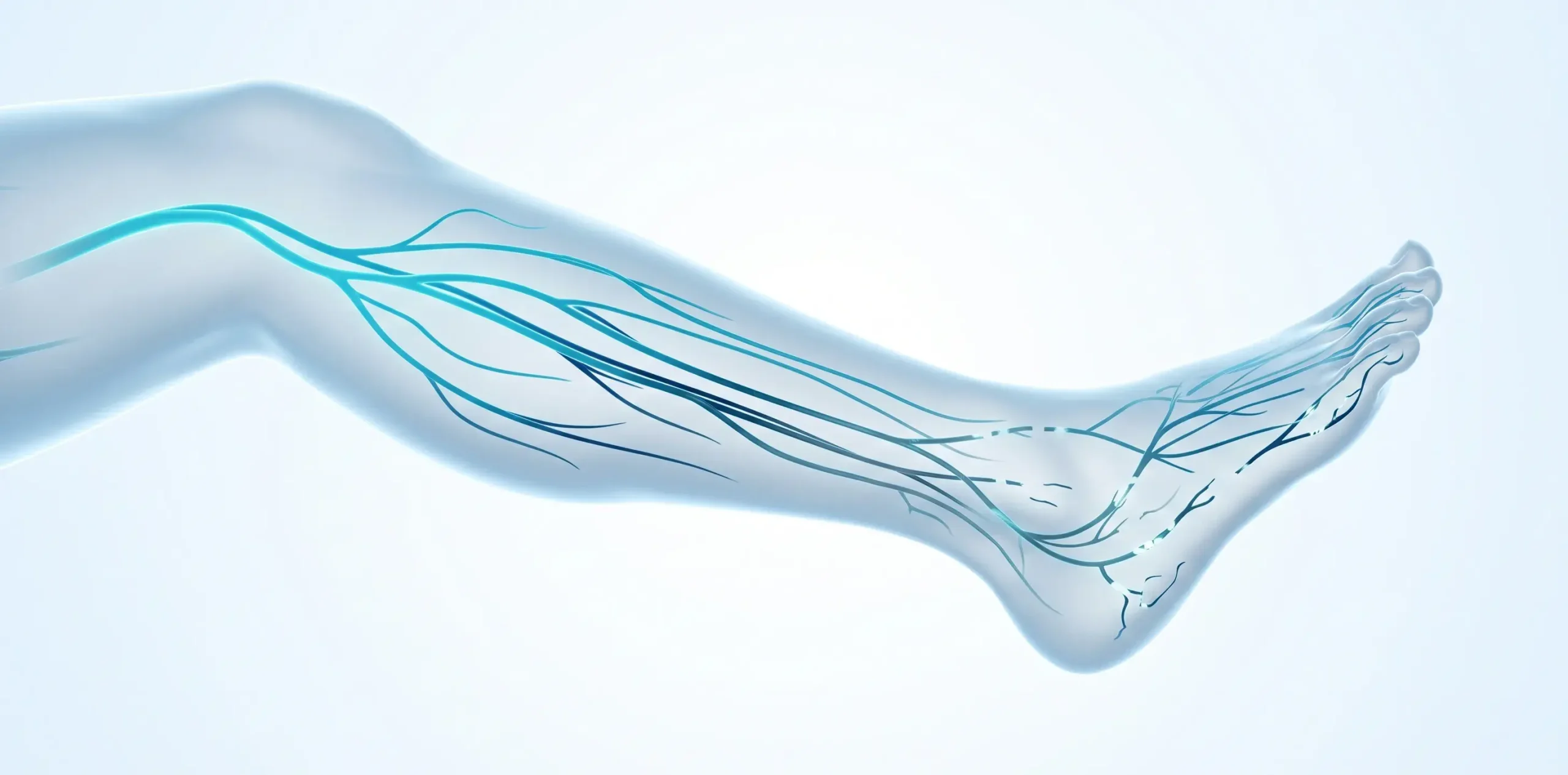
Diabetic neuropathy
Symptoms in the legs and feet: acting on the nerve, not just on the pain
Tingling, burning and night pain in the legs and feet are the typical symptoms of diabetic neuropathy: a sign that the peripheral nerves are suffering. Besides controlling pain, we work on the causes: microcirculation, oxidative stress and the micronutrient deficiencies that affect how the nerve works.
- Identifying the functional deficiencies that worsen nerve damage
- Targeted remedies for neuropathy in the feet and legs: supplementation for nerve metabolism and repair
- Technology-based therapies to improve oxygenation of nerve tissue
- Optimizing overall metabolic control

Diabetic maculopathy and retinopathy
Retinopathy symptoms and protecting your sight, starting from microcirculation
Blurred vision, shadows and blurred areas in the center of the visual field are the first symptoms of diabetic retinopathy. The retina is one of the tissues most sensitive to diabetic damage, because it depends on tiny capillaries. Our work does not replace the eye specialist’s — it complements it, acting on the systemic mechanisms (inflammation, oxidation, microcirculation) that speed up damage to the retina and macula.
- Acting on the systemic factors that worsen retinal damage
- Controlling inflammation and oxidative stress
- Coordination with the patient’s eye care
- Optimizing blood glucose and metabolic control
Learn more: Alpha-lipoic acid infusions · LED light therapy · Clinical nutrition · videos on diabetes and its complications (in Italian)
Frequently asked questions
What patients with diabetes ask us most often
Should I stop the medication I take for diabetes?
No. Drug treatment remains the foundation. Our work complements and optimizes it, acting on nutrition, lifestyle, supplements and technology. Any change to your medication is a clinical decision made together, never on your own.
Can diabetic neuropathy be cured?
It depends on the stage of nerve damage. Acting early on the mechanisms that drive it — microcirculation, inflammation, micronutrient deficiencies — offers the best chance of slowing the damage and, in a number of cases, of noticeably improving symptoms. This has to be assessed for each patient.
Can diabetic retinopathy be cured?
Advanced retinal damage is managed by the eye specialist, but the systemic mechanisms that speed it up — uncontrolled blood glucose, inflammation, microcirculation under strain — can be treated. Our program works alongside eye care with this aim.
How is diabetic foot treated?
On several fronts: assessment of circulation and sensation, therapies for microcirculation such as intravenous laser, nutritional support for tissue repair and daily prevention of wounds. The sooner you act, the better the results.
What “technology” do you mean?
Mainly intravenous laser (ILIB), a German technology that delivers laser light directly into the blood to improve microcirculation and oxygenation of the peripheral tissues.
Where can I have the visit?
We book your first visit in person in Terni, Italy. After that, we can look after you wherever you are. Many patients travel to the practice from other regions: the first visit is used to assess your situation from every angle and build a tailored program, which is why it is worth the journey.
Need a consultation?
Fill in the contact form to request a medical consultation
We book your first visit in person in Terni, Italy.
After that, we can look after you wherever you are.
Your diabetes deserves to be addressed from every angle.
Book a first visit: together we assess your situation and any complications, and build a personalized program.